Choosing new flooring comes down to where it is going, how much traffic it sees and how much water it will face. For Denver homes, the dry Colorado climate, muddy and snowy entryways and below-grade basements all play a part. Here is how three popular options compare.
Porcelain and Ceramic Tile
Tile is the classic choice for kitchens, bathrooms, laundry rooms and entryways. Porcelain is denser and less absorbent than standard ceramic, which makes it the stronger option for wet areas and high-traffic floors.
- Pros: highly water resistant, very durable, easy to clean, works well with radiant floor heat.
- Cons: hard and cool underfoot, grout lines need occasional cleaning and sealing, installation takes longer.
- Best for: bathrooms, kitchens, mudrooms, entryways and showers.
Laminate Flooring
Laminate uses a high-density fiberboard core with a printed image layer and a tough wear layer on top. It looks like wood or stone at a lower cost and installs quickly as a floating floor.
- Pros: budget-friendly, scratch resistant, warmer underfoot than tile, quick to install.
- Cons: standing water can damage the core of many products, and it cannot be refinished.
- Best for: living rooms, bedrooms, hallways and dry basements with the right underlayment.
Look at the AC rating, which measures wear resistance. Higher ratings stand up better in busy rooms.
Wood-Look Tile
Wood-look tile is porcelain printed and textured to look like hardwood planks. It gives you the warmth of a wood floor with the durability and water resistance of tile.
- Pros: water resistant, extremely durable, will not warp or scratch like wood, suits open floor plans.
- Cons: hard underfoot, long planks need a very flat subfloor to avoid lippage.
- Best for: kitchens, bathrooms, basements and open-concept main floors.
Quick Comparison by Room
- Bathroom: porcelain or wood-look tile.
- Kitchen: wood-look tile or porcelain; laminate only with a water-resistant product and careful spill habits.
- Basement: wood-look tile or a moisture-appropriate laminate after a moisture check.
- Living areas and bedrooms: laminate for warmth and value, or wood-look tile for a seamless look.
- Entryway and mudroom: tile, to handle snow, mud and salt.
Why the Subfloor Matters Most
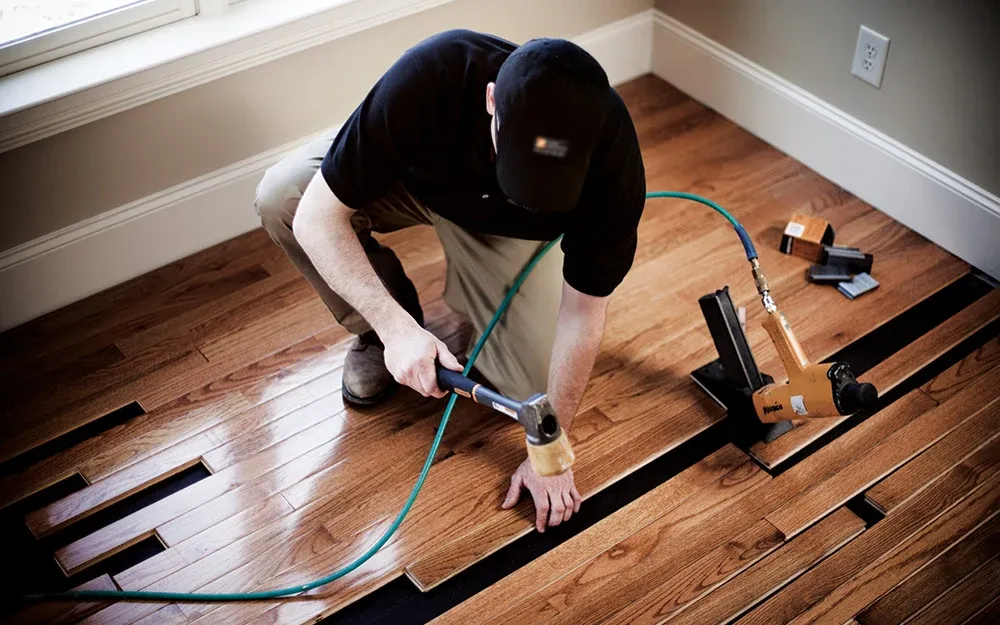
Whatever you choose, the floor is only as good as what is underneath it. Uneven, damaged or flexing subfloors cause cracked tiles, gaps in laminate and squeaks. Proper preparation, including removing old flooring and repairing damaged sections, is what makes a new floor last.
If you are planning a basement, read about permits and planning for a finished basement in Denver. For kitchens, our kitchen remodel guide covers how flooring fits with cabinets and countertops, and for bathrooms see our spa-like bathroom ideas.
BlueJay installs tile, laminate and wood-look tile across the Denver metro. Learn more about our flooring installation service or book a free in-home estimate.
Frequently Asked Questions
What is the most durable flooring for a Denver home?
Porcelain and wood-look tile are the most durable and water resistant options. Laminate is also tough against scratches but is more sensitive to standing water.
Is laminate flooring good for basements?
It can be, if the basement is dry and the right underlayment is used. Check for moisture first; tile is the safer choice in basements with any history of water.
Does wood-look tile feel cold?
Tile feels cooler than laminate or wood. Area rugs or radiant floor heating make it more comfortable in living spaces.